 Ask Athena
Employer Partnerships | HR and People
Hire, onboard and develop for calibre.
IOWL gives HR leaders a way to look beyond qualifications, skills and experience by asking whether candidates and employees can evidence judgement, integrity and values-led responsibility.
Discuss HR deploymentEmployer overviewSelectionEngagementRetentionCalibre Credits™
The HR blind spot: culture contribution and entrusted judgement are often evidenced too late.
Qualifications and interviews can show knowledge and experience. IOWL adds structured evidence relevant to judgement, integrity and responsible application where pressure, ambition, conflict or greater responsibility matter.
Calibre Credits™ and the Statement of Professional Standing™: Calibre and Integrity help HR professionals bring the third pillar into selection and development. They add structured evidence of how a candidate has developed and demonstrated judgement, integrity and responsible application within the IOWL framework, supporting warranted confidence while the employer remains responsible for role-specific selection and future-contribution judgement.
Interview question: “Do you hold a current IOWL Statement of Professional Standing™: Calibre and Integrity or Calibre Credits™ record?”
Review the Basis of Calibre > | Employer guide to Calibre evidence >
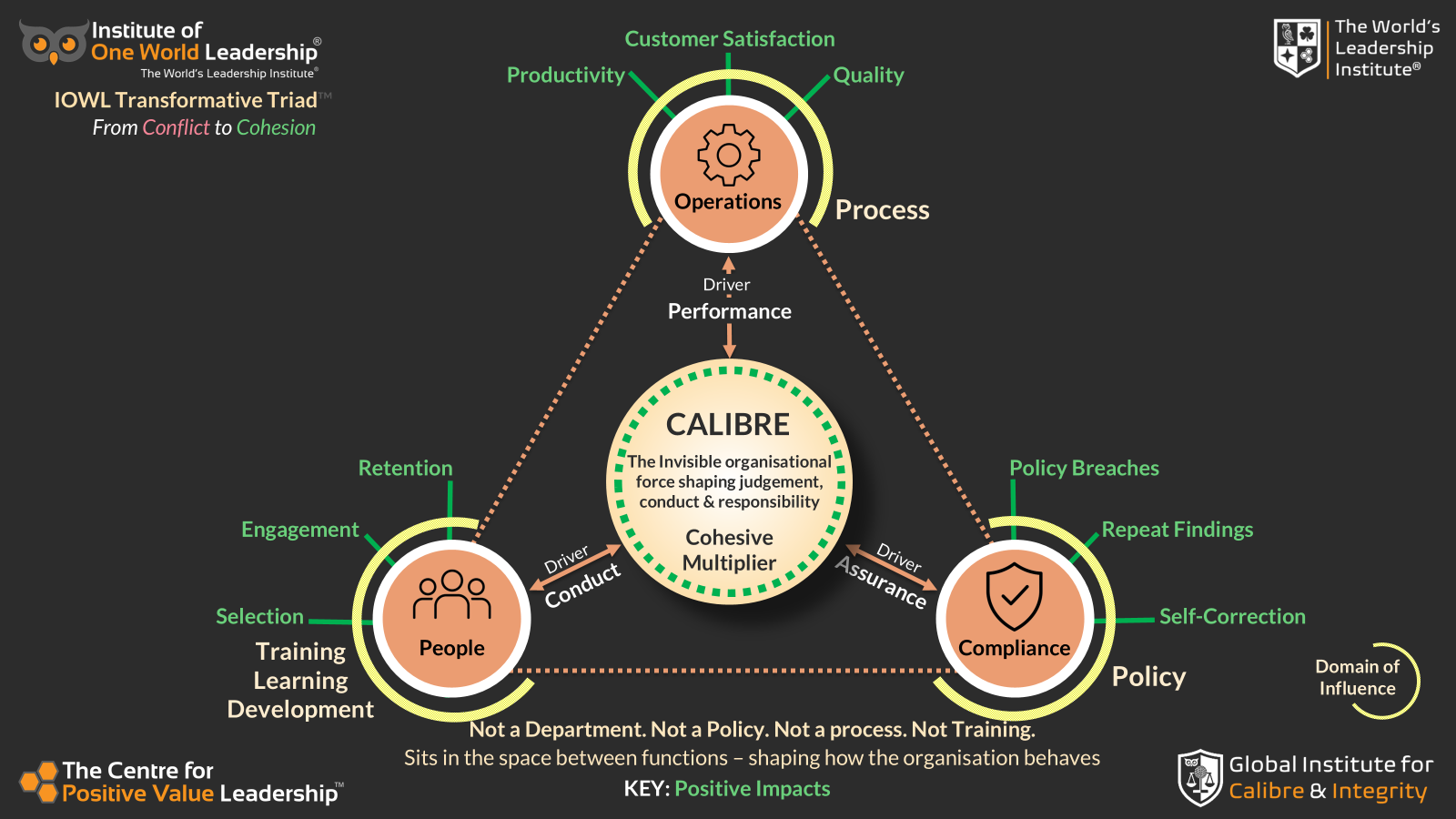
Where HR can use IOWL
IOWL fits the points where organisations need warranted confidence in how people may exercise skill, responsibility and influence.
Recruitment and selection
Use the Statement of Professional Standing™: Calibre and Integrity as an additional evidence point for roles involving trust, customer contact, financial responsibility, influence or leadership potential.
Onboarding and probation
Where a preferred candidate does not yet hold IOWL standing, the employer can make Foundation or Keystone part of onboarding or probation, where role-relevant and lawful.
Engagement and retention
PVL gives employees a personal development route that develops Calibre, agency and responsibility alongside technical competence. PCD then carries that development forward as roles and responsibilities change.
Recommended HR pathway use
Match the PVL pathway to the level of responsibility the employee is entering.
Foundation
New recruits
Use for graduate entrants, apprentices, early-career hires and candidates whose potential is strong but who need a structured calibre foundation.
Keystone
Front-line responsibility
Use for employees who influence customers, colleagues, service quality, workplace culture or first-line decisions.
Capstone
Leadership influence
Use for people managers, senior specialists and employees whose decisions influence culture, trust and organisational reputation.
Frequently asked questions for HR
Where it is relevant to the role and applied fairly, an employer may make appropriate professional development a condition of appointment, onboarding, probation or promotion readiness. Employers should apply local employment law, equality duties and reasonable accommodation requirements.
It complements reference checks, interviews and competency assessment by adding formally awarded IOWL evidence of Calibre development, assessment and current standing.
Foundation can be used with new recruits and graduates to develop a shared language of calibre, integrity and responsibility early in their employment journey.
How to interpret the evidence: warranted confidence is grounded in defined standards, structured development, the combined Calibre assessment, integrity assurance, formal recognition and continuing PCD. The employer remains responsible for the employment or promotion decision and for role-specific due diligence.
Build calibre into your people strategy
Use IOWL to support recruitment, onboarding, engagement and progression.
Discuss HR deploymentBack to employer overview