 Ask Athena
Employer Partnerships | Operations and Performance
Process creates consistency. Calibre strengthens performance when reality changes.
Operational results depend on systems and capability, but everyday performance is also shaped by judgement, ownership, collaboration and the quality of decisions made when the script no longer fits.
Discuss operations deployment Employer overviewProductivityQualityServiceCalibre-Driven Performance
The operations challenge: process depends on judgement.
Capability is what people know. Competency is what they can do. Calibre concerns how, why and for whose benefit they use both when operational reality becomes pressured, uncertain or imperfect.
IOWL adds a human performance layer to operational development. Positive Value Leadership™ and Perpetual Calibre Development™ help people approach situations with foresight, use insight in the moment, and learn through hindsight.
Operational habit: Stop. Think. Act. Respond. The aim is considered action rather than avoidable reaction, especially where decisions affect quality, customers, colleagues or trust.
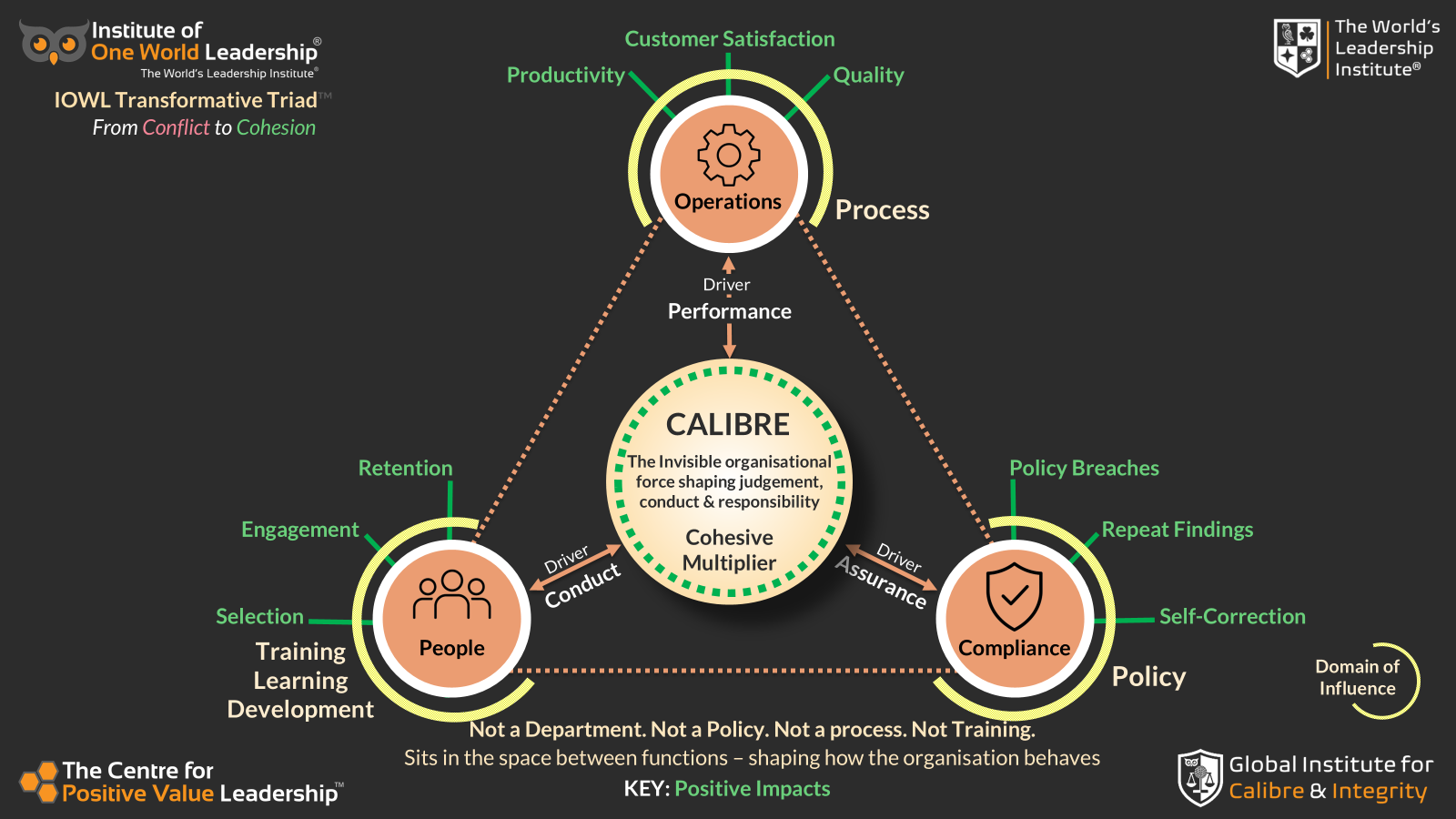
Where operations leaders can use IOWL
Use Calibre development where the quality of human judgement materially affects delivery.
Productivity
Reduce avoidable human friction
Develop ownership, communication, collaboration and responsible decision-making where delay, rework, blame-shifting or poor handovers undermine performance.
Quality
Strengthen judgement around standards
Processes and controls define expectations. Calibre supports the care, challenge and responsibility needed to apply standards consistently and escalate when something is not right.
Service
Improve the decisions customers experience
Service quality is shaped in moments of judgement. PVL gives teams a values-led framework for fairness, clarity, ownership and responsible response.
Foresight, insight and hindsight
Operational Calibre is not a one-off training event. It is developed and applied repeatedly as context changes.
Foresight
Approach circumstances prepared
Consider likely consequences, affected stakeholders, risks and Positive Values before pressure forces a decision.
Insight
Use judgement in the moment
Stop, think, act and respond using the information, responsibilities and values available at that point in time.
Hindsight
Learn from what actually happened
Review what was done, whether it was the right thing to do, what can be learned and what should be done differently next time.
Process
Defines the intended way of working.
Capability and competency
Enable people to understand and perform the work.
Calibre
Strengthens how and why people use both when judgement is required.
Recommended operations deployment
Match development to the level of operational influence and responsibility.
Foundation
New recruits and early-career teams
Create a common language of Calibre, responsibility and Positive Value Leadership from the start of employment.
View Foundation pathwayKeystone
Front-line teams and junior managers
Develop employees who directly influence quality, customers, team culture, handovers, escalation and operational decisions.
View Keystone pathwayCapstone
Middle and senior management
Develop managers whose decisions shape performance systems, culture, resource choices, cross-functional trust and organisational outcomes.
View Capstone pathwayPerpetual Calibre Development™: development continues after a course, but it is need-led and contextually driven. The question is not simply what training comes next, but what Calibre is required for the situation, responsibility and future role ahead.
Frequently asked questions for operations
How Calibre development fits with operational systems and performance improvement.
No. It does not teach an employer's process, product or technical method. It develops the Calibre of people who use, interpret, challenge and improve those systems.
No single intervention guarantees productivity. IOWL addresses human factors such as judgement, responsibility, communication and collaboration that can influence friction, rework, decision quality and execution.
Yes. Employers can deploy PVL alongside existing quality, service and performance programmes where human judgement and conduct are material to the outcome.
The pathway should become part of continuing Perpetual Calibre Development™. Employees apply foresight, insight and hindsight as their work, responsibilities and circumstances change.
Build Calibre into operational performance
Strengthen the human judgement that sits between process design and real-world delivery.
Discuss operations deploymentHow to use Calibre evidenceExplore Calibre-Driven Performance